
You’ve noticed the changes. The jawline that used to be sharp is softer now. The skin on your neck isn’t as taut as it was five years ago. You’re not interested in surgery, but you’re also not interested in treatments that promise the world and deliver a week of temporary plumpness.
Non-surgical skin tightening has become one of the most searched aesthetic categories in Singapore, and for good reason: the technology has finally caught up to the promise. But not all treatments are equal, and the differences matter clinically.
This guide explains how Ultherapy compares to the other main non-surgical skin tightening options available in Singapore, what each treatment actually does at a tissue level, and how to choose the right one for your specific concerns.

Key Takeaways
In This Guide
- Ultherapy is the only non-surgical treatment FDA-cleared specifically for skin lifting, targeting the SMAS layer at 4.5mm depth with real-time ultrasound visualisation.
- Radiofrequency (RF) treatments heat the dermis to stimulate collagen but do not reach the deeper structural layers that determine lifting outcomes.
- Standard HIFU devices marketed in Singapore often lack the imaging guidance that makes Ultherapy precise and safe for anatomical targeting.
- The right treatment depends on your skin laxity severity, target area, and whether you need surface tightening or structural lift.
What Non-Surgical Skin Tightening Actually Means
The term “skin tightening” is used to describe at least three different biological outcomes, and most patients don’t realise they’re not the same thing.
Surface tightening refers to improvement in skin texture and fine lines, usually achieved by stimulating the upper dermis. Dermal tightening targets the mid-to-deep dermis to improve firmness and reduce mild laxity. Structural lifting addresses the fascial and SMAS layers beneath the dermis to produce measurable upward repositioning of tissue.
Different technologies achieve different outcomes. A treatment that tightens the surface beautifully may do nothing for jowls. A treatment that lifts structurally may not refine skin texture. Understanding this distinction is the first step to choosing correctly.

Ultherapy: The Gold Standard for Structural Lifting
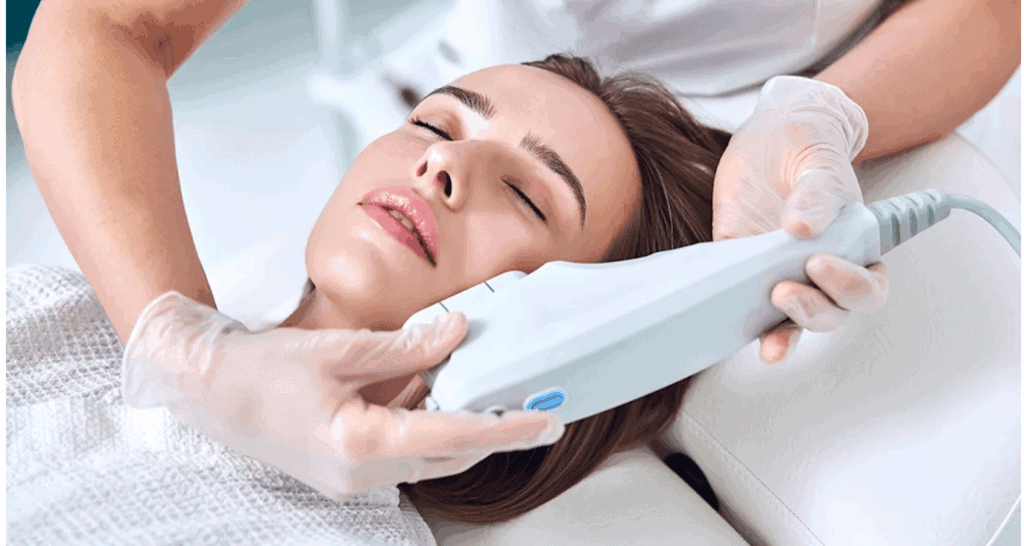
Ultherapy uses micro-focused ultrasound with visualisation (MFU-V) to deliver thermal energy at three depths, reaching 1.5mm, 3.0mm and 4.5mm (the SMAS layer), the same layer surgeons lift during a facelift. What sets it apart is real-time ultrasound imaging, letting the doctor see tissue layers on screen and avoid structures like nerves and bone, rather than relying on approximate energy delivery.
Ultherapy was the first device FDA-cleared specifically for non-invasive skin lifting in 2009, covering the brow, neck, submental area and décolletage. Over 2 million treatments have been performed worldwide, backed by more than 50 clinical studies and 120 peer-reviewed publications. Results are progressive, with early tightening visible at four to six weeks, peak lifting at three to six months, and results lasting 12 to 18 months or beyond.
Clinics such as Ozhean Zoey offer Ultherapy treatments for those looking for non-invasive skin tightening in Singapore, with doctors trained in the advanced protocols that optimise both comfort and outcomes.
Radiofrequency (RF) Treatments: Surface and Dermal Tightening
Radiofrequency treatments deliver controlled heat to the dermis, typically reaching 40 to 45°C. This triggers immediate collagen contraction and gradual neocollagenesis over the following weeks to months.
- What it treats well: Skin texture, fine lines and mild to moderate laxity in the face, neck and body, suiting patients in their thirties to early forties who want preventative tightening rather than correction of significant sagging
- The limitation is depth: Most RF devices target the dermis but do not reach the SMAS or deep fascial layers, so they can tighten skin but cannot produce the structural lift needed for jowls, significant neck laxity or brow ptosis
- Common RF platforms in Singapore: Monopolar RF such as Thermage or 10THERMA, bipolar and multipolar devices, and fractional RF microneedling like Secret RF, each relying on dermal heating rather than SMAS-level targeting
Standard HIFU: The Imaging Gap
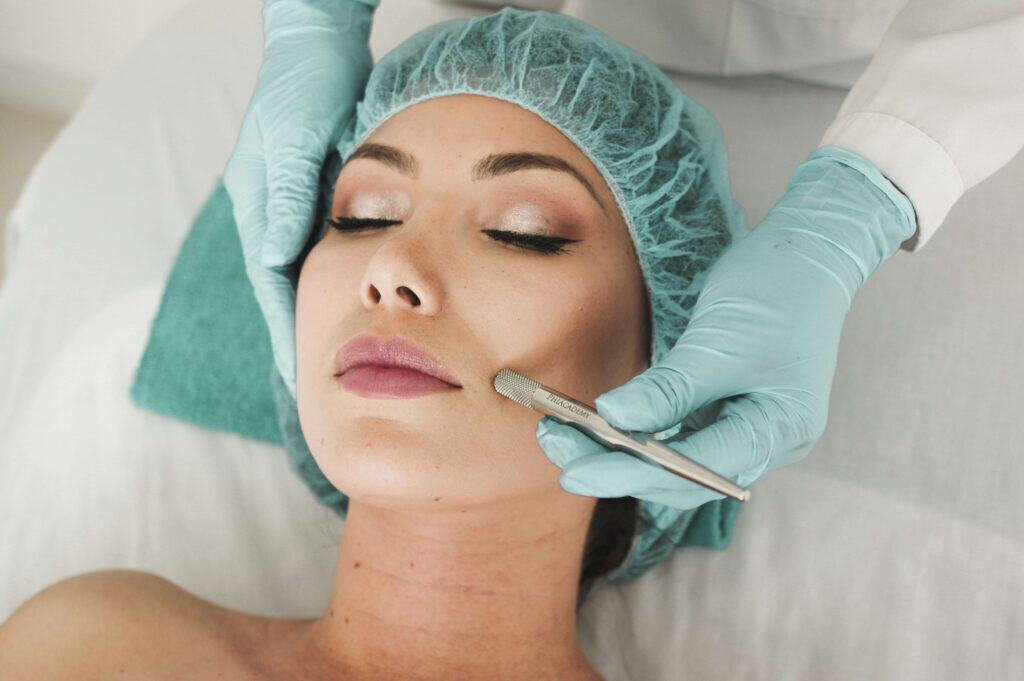
High-Intensity Focused Ultrasound (HIFU) has become widely available in Singapore, often marketed at significantly lower price points than Ultherapy. The appeal is understandable, since the technology sounds similar and the before-and-after photos can look impressive.
The Critical Difference Is Imaging
Most standard HIFU devices deliver focused ultrasound energy at set depths without real-time visualisation of the tissue being treated. The operator cannot see whether the energy is actually reaching the SMAS, whether it is too superficial, or whether it is approaching a nerve or bone.
Why This Matters Clinically
Without imaging, treatment outcomes are operator-dependent and anatomically variable. Some patients achieve good results. Others experience no visible change, or worse, nerve proximity injuries that cause temporary numbness or asymmetry.
What the Research Shows
A 2024 study in the Journal of Cosmetic Dermatology comparing Ultherapy to standard HIFU found that Ultherapy’s visualisation capability resulted in stronger lifting outcomes and a reduced risk of adverse events.
Thread Lifts: Mechanical Lifting with Trade-Offs
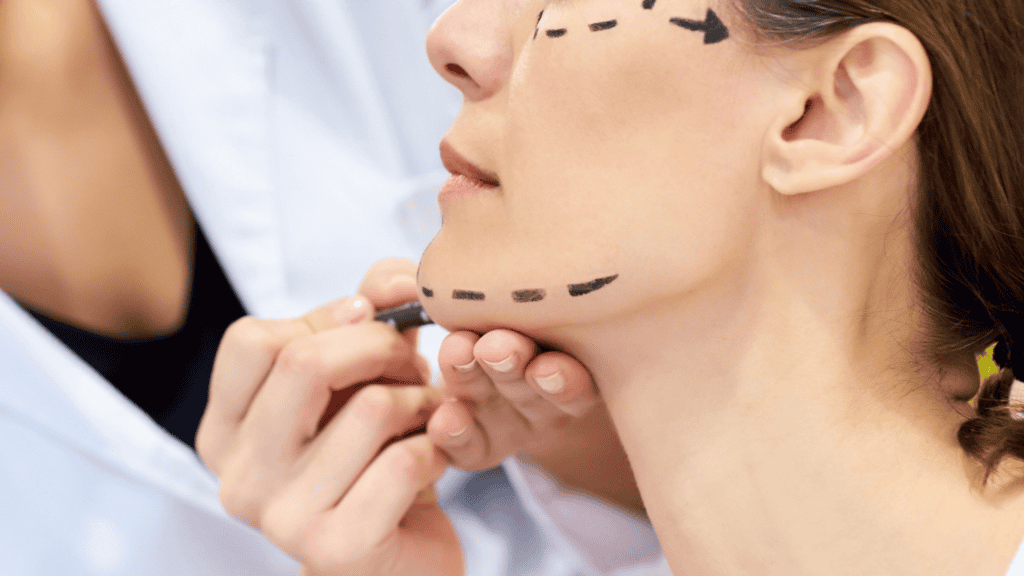
Thread lifts use absorbable sutures, typically PDO or PLLA, inserted under the skin to physically lift sagging tissue. Barbed threads provide immediate mechanical lift by anchoring to subcutaneous tissue, while smooth threads stimulate collagen production as they dissolve.
They can produce visible lifting in the mid-face, jowls and neck, particularly for patients with mild to moderate laxity who want faster results than energy-based treatments provide. The procedure is minimally invasive, performed under local anaesthetic, with minimal downtime.
The trade-offs are durability and predictability. Results typically last 12 to 18 months before threads dissolve and tissue returns toward baseline, with a higher risk of visible irregularities, asymmetry and migration compared to energy-based treatments.
Thread lifts work best in combination: threads for immediate mechanical lift, Ultherapy or RF for progressive, longer-term structural support.
How to Choose the Right Treatment for Your Skin
The right non-surgical skin tightening treatment depends on three factors: the severity of your laxity, the area you want to treat, and whether your primary goal is surface refinement or structural lifting.
For mild laxity and preventative tightening (age 30–40, minimal sagging): Radiofrequency treatments or fractional RF microneedling are appropriate first-line options. They improve texture, stimulate collagen, and maintain skin quality without the depth or intensity of SMAS-targeted treatments.
For moderate laxity with visible sagging (jowls, neck bands, brow descent): Ultherapy is the evidence-based choice. Its ability to target the SMAS layer with imaging guidance produces measurable lifting that RF and standard HIFU cannot reliably achieve.
For significant laxity or patients wanting faster visible results: A combination protocol of thread lifting for immediate mechanical correction followed by Ultherapy for progressive structural tightening often produces the most satisfying outcome.
For skin texture and fine lines without significant sagging: Fractional RF microneedling, laser resurfacing, or dermal RF treatments address surface concerns more effectively than deep-tissue lifting technologies.
A structured consultation with a clinician experienced in multiple modalities is essential. The best aesthetic doctors do not push a single device. They assess your anatomy, listen to your goals, and recommend the treatment or combination that the evidence supports for your specific case.
Why Ultherapy Treatments in Singapore Require the Right Hands
Ultherapy is an operator-dependent treatment. The device provides the imaging and energy delivery system, but the doctor determines where to treat, at what depth, with how many lines, and at what energy level. Poor technique produces poor results. Excellent technique produces the outcomes that made Ultherapy a global standard.
When evaluating a clinic for Ultherapy in Singapore, ask specific questions. How many Ultherapy treatments has the doctor personally performed? Are they trained in the advanced layering protocols that optimize lifting in the neck and lower face? Do they use imaging to map your anatomy before every treatment, or do they rely on standard templates?
Experience matters. At clinics with high Ultherapy volumes and advanced training credentials, outcomes are consistently stronger and complication rates are lower. This is not marketing. It is what the clinical data shows across aesthetic procedures generally and Ultherapy specifically.
Ready to Tighten What Time Has Loosened?
Non-surgical skin tightening is no longer about choosing between weak results and going under the knife. The technology has evolved to the point where patients with moderate laxity can achieve measurable, durable lifting without surgery, downtime, or the risks that come with invasive procedures.
Ultherapy remains the most clinically validated option for structural lifting, supported by the largest evidence base, the longest track record, and FDA clearance for the specific indication of skin lifting. For patients who want proven results rather than experimental promises, it is the benchmark against which every other treatment is measured.
If you are considering non-surgical skin tightening in Singapore, start with a proper assessment. Understand your anatomy, clarify your goals, and choose a clinic where the doctor’s experience matches the sophistication of the technology they are using.
The right treatment, delivered correctly, changes not just how you look but how confidently you move through the world.
Thanks for taking the time to read this article. I hope this post has given you the information you need. If you have any recommendations, tips or advice, I would love for you to share them in the comment section below!
This post may contain affiliate links, meaning we may receive a commission at no extra cost if you purchase through a link. Please see our full disclosure for further information.
Check out my Instagram page or join the Truly Expat Facebook group.
Running this blog takes a lot of coffee (and countless hours exploring every destination!). If you found this helpful and want to support more honest, detailed travel guides and itineraries, you can buy me a coffee. No pressure though – I’m just happy you’re here and hope you have an incredible adventure! 🙂

Latest Posts
- Revolut Ultra Singapore: Is It Finally the Travel Card You’ve Been Waiting For?
- SafetyWing Review: Insurance for Digital Nomads, Expats & Long-term Travellers
- Non-Surgical Skin Tightening in Singapore: How Ultherapy Compares to Other Treatments
- The Overlooked Healthcare Cost Expats in Dubai Often Discover Too Late
- Why Serviced Offices Are A Smart Base For Foreign Directors In Singapore
